WHAT IS ROSEMARY? Rosemary (Rosmarinus officinalis) is a woody, perennial herb with fragrant, evergreen, needle-like leaves. It is native to the Mediterranean region. It is a member of the mint family Lamiaceae, which also includes many other herbs. The name rosemary derives from the Latin name rosmarinus, which is from "dew" (ros) and "sea" (marinus), or "dew of the sea" because in many locations it needs no other water than the humidity carried by the sea breeze to live. The plant has also sometimes been referred to as Anthos, from the ancient Greek word "ἄνθος", simply meaning "flower". Forms range from upright to trailing; the upright forms can reach 1.5 m (5 ft) tall, rarely 2 m (6 ft 7 in). The leaves are evergreen, 2–4 cm (0.8–1.6 in) long and 2–5 mm broad, green above, and white below with dense short woolly hair. Flowering, very common in a mature and healthy specimens, occurs in summer in the north, but the plants can be everblooming in warm-winter climates; flower colors are variable, being white, pink, purple, or blue. Coming from the Latin words ros marinus, rosemary translates into dew of the sea. It was said to be draped around Aphrodite when she rose from the sea and was originally born of Ouranos's
semen. Today, the goddess Aphrodite is associated with rosemary, as is
the Virgin Mary, who was supposed to have spread her cloak over a
white-blossomed rosemary bush when she was resting; according to legend,
the flowers turned blue, the color most associated with Mary. WHERE DO WE USE ROSEMARY? Internal useIt is used with great success for dyspeptic complaints, flatulence
and to stimulate appetite and the secretion of gastric juices. It is also used as supportive therapy for rheumatism and circulatory problems. In herbal preparations it can be included to ensure proper circulation to the penis. Furthermore it is used for headaches, as well as for nervous complaints. Rosemary is used widely in Mediterranean cooking and the fresh or dried
leaves are used to flavor meat (especially lamb and kid), sausages,
stuffing, soups, stews and to make tea. The flowers can also be added to
salads.
Externally, rosemary helps to increase circulation and is very often
used in hair care products and lotions as it stimulates the hair
follicles to renewed activity and prevent premature baldness. It
has two important properties - it is an outstanding free radical
scavenger and therefore has amazing antioxidant properties, and secondly
has an remarkable stimulating effect on the skin.
Medicated Oils are oils infused with the leaves and flowering tops. Used
for healing, oils are also used for skin and hair conditioning. Four
methods are available to make Medicated Oils. 1) heat 250g dried or 750g
fresh herb in 500ml of oil in a bowl over boiling water for 2-3 hours.
2) fill a jar with fresh herbs, top it up with oil, cover and leave for
2-3 weeks. Renew the herb for another 2-3 weeks to increase the
concentration (best for flowers). 3) add 25-50 drops of the "essential
oils of the herb" into 100ml of Oil for immediate use. 4) essential oils
are obtained by evaporation of the herb in a stoppered glass container
left in the sun for several days and use for externally for treating
Arthritis and Rheumatism, Neuralgia, Muscular Injuries, and wounds Several studies done in the last several years show that oil from the leaves of the very plant sold as a spice for flavoring can help prevent the development of cancerous tumors in laboratory animals. One study, led by Chi-Tang Ho, Ph.D., professor in the Department of Food Science at Rutgers University in New Brunswick, New Jersey, showed that applying rosemary oil to the skin of experimental animals reduced their risk of cancer to half that found in animals that did not receive the application of oil. In other studies by the same research team, animals whose diets contained some rosemary oil had about half the incidence of colon cancer or lung cancer compared with animals not eating rosemary. And researchers at the University of Illinois in Urbana found that rosemary cut by half the incidence of breast cancer in animals at high risk for developing the disease. Future studies will demonstrate whether these properties extend to humans as well. Though these experiments have used rosemary oil to test the effectiveness in preventing cancer, the oil should not be taken internally. Even small doses can cause stomach, kidney and intestinal problems, and large amounts may be poisonous. Use a tea instead. Pregnant women should not use the herb medicinally, although it's okay to use it as a seasoning. 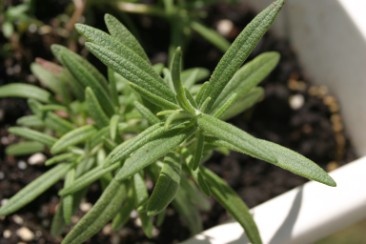 |
 Aromatherapy and essential oil use
Medicated Oils are oils infused with the leaves and flowering tops. Used
for healing, oils are also used for skin and hair conditioning. Four
methods are available to make Medicated Oils. 1) heat 250g dried or 750g
fresh herb in 500ml of oil in a bowl over boiling water for 2-3 hours.
2) fill a jar with fresh herbs, top it up with oil, cover and leave for
2-3 weeks. Renew the herb for another 2-3 weeks to increase the
concentration (best for flowers). 3) add 25-50 drops of the "essential
oils of the herb" into 100ml of Oil for immediate use. 4) essential oils
are obtained by evaporation of the herb in a stoppered glass container
left in the sun for several days and use for externally for treating
Arthritis and Rheumatism, Neuralgia, Muscular Injuries, and wounds
Though these experiments have used rosemary oil to test the effectiveness in preventing cancer, the oil should not be taken internally. Even small doses can cause stomach, kidney and intestinal problems, and large amounts may be poisonous. Use a tea instead. Pregnant women should not use the herb medicinally, although it's okay to use it as a seasoning.
Other Medicinal Properties
Rosemary makes a pleasant-tasting tea. Use one teaspoon of crushed dried leaves in a cup of boiling water and steep for ten minutes.
Cosmetic UsesUse an infusion as a rinse to lighten blond hair, and to condition and tone all hair. Try mixing an infusion half and half with shampoo to strengthen hair. An infusion can also be used as an invigorating toner and astringent. Rosemary added to a bath strengthens and refreshes, especially when used following an illness. The herb can be used as a Wash by diluting an unsweetened Infusion or Decoction, or adding a Tincture to a large quantity of water and use by applying externally to the affected area and use for treating Dandruff.
Culinary UsesRosemary and lamb go well together. Make slits in lamb for roasting and tuck in sprigs of the herb. Place larger sprigs over chops for grilling and use chopped leaves sparingly in soups and stews. Use rosemary in bouquets garnis and sparingly with fish and in rice dishes. Leaves and flowers are used fresh or dried to flavour a variety of dishes. Also used in vinegars, wines and olive oils.
|
